Companies are searching for AI experts. Meanwhile, those experts are already sitting in their own offices.
"Boss, by the way, we have a customer portal now."
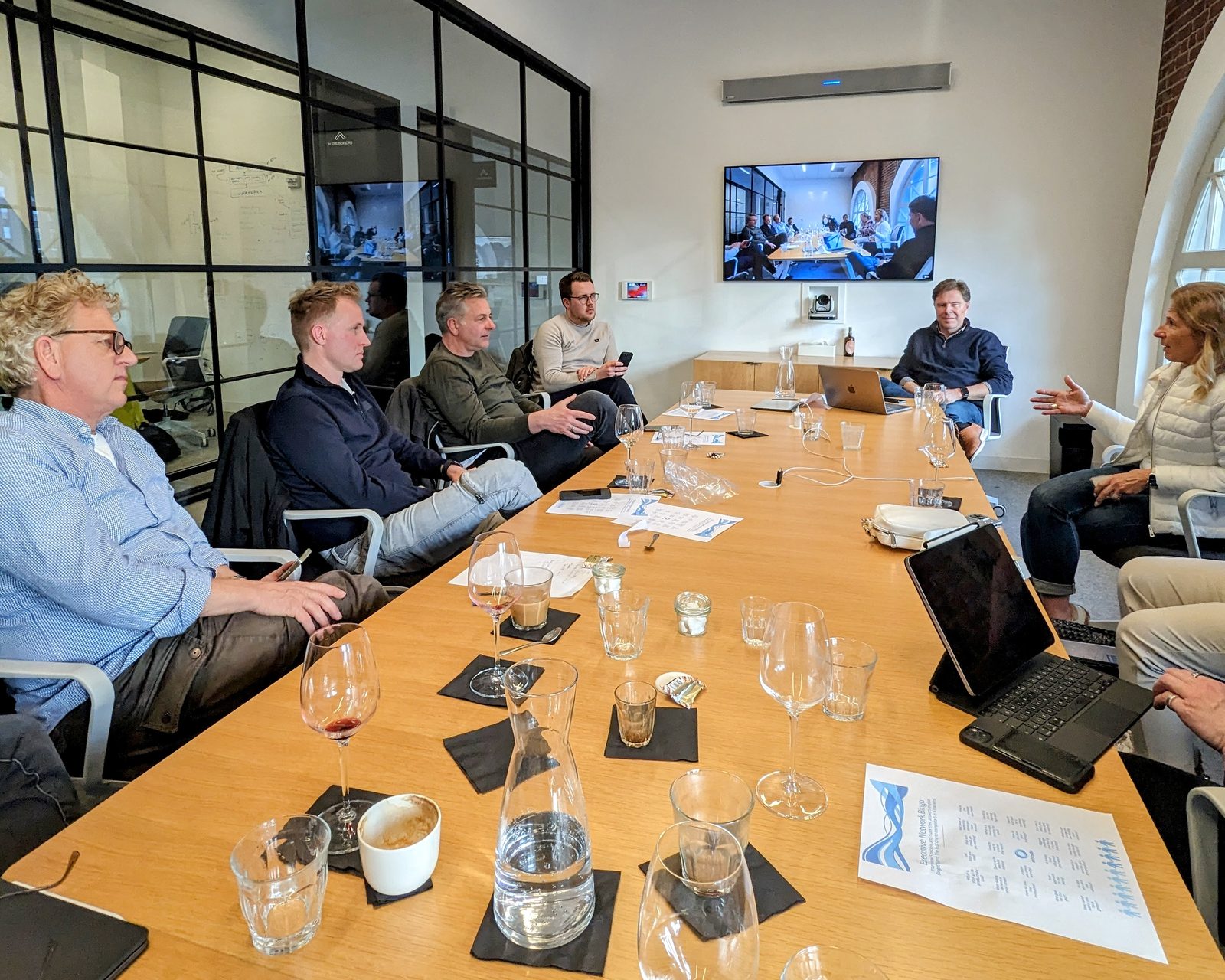
Last week I attended my advisory circle, a group of entrepreneurs and consultants that meets regularly. As so often, the discussion revolved around artificial intelligence: What impact will it have on our companies? Which processes will change? And above all: how do we actually build the necessary competence inside our organizations?
The longer we discussed, the clearer a shared feeling became: hardly anyone today has truly deep AI knowledge. And nobody in the room could say how companies are supposed to build that competence for the long run. External consultants can provide impulses, training courses teach the basics. But how does that turn into an organization that keeps pace with this development?
In the middle of this discussion, one of the entrepreneurs told a story from his company.
A few days earlier, an employee had walked into his office and said: "Boss, by the way, we have a customer portal now."
The entrepreneur looked at him in surprise. "Excuse me? We have a customer portal?"
The employee explained that over the past few weeks, he had built a working prototype using modern no-code tools and artificial intelligence. No official project. No big budget. No strategy presentation. He had simply seen a problem and started solving it.
What impressed me about this story
It wasn't the customer portal.
It was the entrepreneur's reaction.
He didn't ask why nobody had been informed. He didn't ask about approvals or responsibilities. He simply said:
"That's fantastic."
On the drive home, I kept thinking about this story.
Maybe we're looking for AI competence in the wrong places.
Maybe we don't need to buy it in from outside at all.
Maybe it has been inside our companies all along.
I call these people Digital Explorers
Digital Explorers are employees who try out new technologies out of their own curiosity. They build small solutions, test new tools, automate processes, and discover possibilities long before official projects emerge. They don't do it because it's in their job description. They do it because they enjoy making things better.
I'm convinced that every company already has people like this.
The real challenge is not training them.
The real challenge is recognizing them.
In my article on Shadow AI, I wrote that companies shouldn't treat the unauthorized use of AI tools merely as a security problem, but also as a learning signal. Today I would take that thought one step further: behind many of these initiatives there is no rule-breaking. There is usually a Digital Explorer – someone who is already pulling the company into the future without anyone noticing.
What this means for leadership
The task today is no longer just to develop an AI strategy or select the right tools. It is to make the people visible who have already started driving the change. These employees don't need detailed instructions. They need orientation, exchange, and a safe framework in which they can experiment. Above all, they need visibility. Because only when their experiences are shared do individual experiments turn into real cultural change.
The first step is easier than many think. It fits into a single question at your next team meeting:
"Who has built or tried something with AI in the past few months that I don't know about?"
I promise: the answers will surprise you.
The better question
Maybe we're asking companies the wrong question today. Instead of asking "Which AI should we use?", we should first ask: "Who actually are our Digital Explorers?"
Because any company can buy technology.
Curiosity, initiative, and the willingness to change can't be bought.
I believe the companies that will work most successfully with artificial intelligence in the coming years won't necessarily be the ones with the biggest budgets or the most advanced models. They will be the ones that recognize their Digital Explorers, connect them with each other, and give them the space to shape the change from within.
That's why the future of a company often doesn't start with a new AI.
It starts with an employee who walks into the boss's office one day and says:
"Boss, by the way, we have a customer portal now."
How companies can systematically identify, connect, and activate their Digital Explorers is what I describe in the Digital Explorer Framework.
If you want to find out who is already exploring inside your company – let's talk.