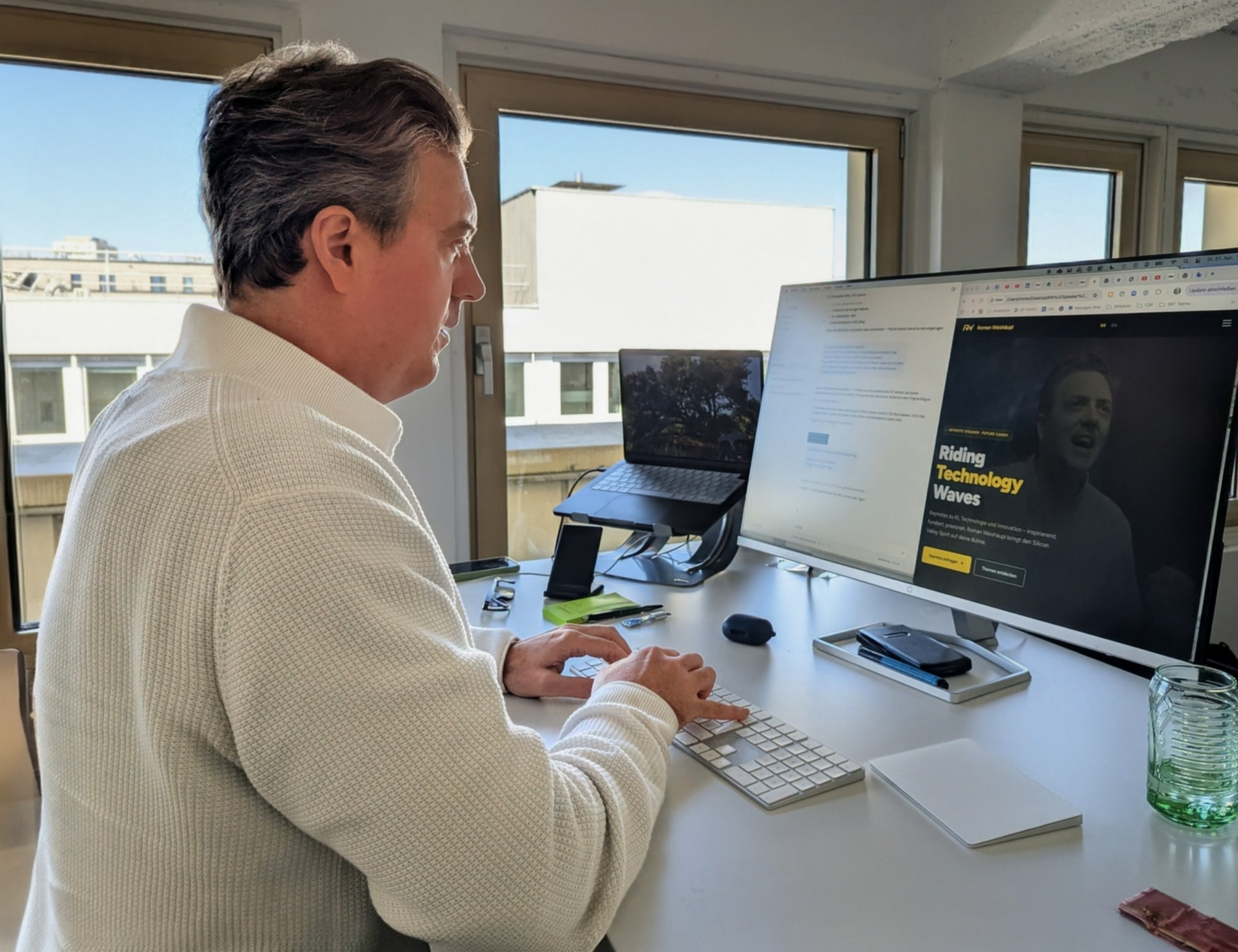
The Moment Before the Blinking Display
Saturday evening in the 90s. The new VCR sits in the living room. My parents stare at the display – blinking numbers, cryptic symbols.
Nothing works.
Then they look at me:
"Can you set this up?"
Back then it felt natural. I didn't wonder whether I could. I just tried.
Just Doing It Instead of Needing to Understand First
I never read manuals. I unpacked new devices and started experimenting. Just got going.
Then came the first Atari, the first 486, dot-matrix and laser printers. The internet at 56K, later ISDN. The first mobile phones, the Palm, then smartphones. I never planned any of it. I simply went along.
And now I'm the age my parents were back then. And in front of me stands another one of those moments.
This time it's called: Vibe Coding.
Programming was never my thing. Except a bit of QBasic in school I never wrote code. And yet here I am, building things.
"I never learned to program. I learned to start."
Digital Explorer: A Question of Mindset
I think this is exactly where the difference lies. There is a generation that grew up analog and still chose, again and again, to try new technologies. Not perfectly, not in a structured way, but with curiosity.
I call them Digital Explorers – people who never stop trying new things.
"It's not age that decides. It's the willingness to embrace what's new."
It's not a question of talent or education. It's a question of mindset. The readiness to engage with something you don't yet fully understand – and to start anyway.
What Happens When You Simply Try
A few days ago I did exactly that. I started Vibe Coding. Without a big plan, but step by step. Try, adjust, move on.
I rebuilt my entire speaker website from scratch. Alone. Without a designer, without a developer, without classical programming. And in three days.
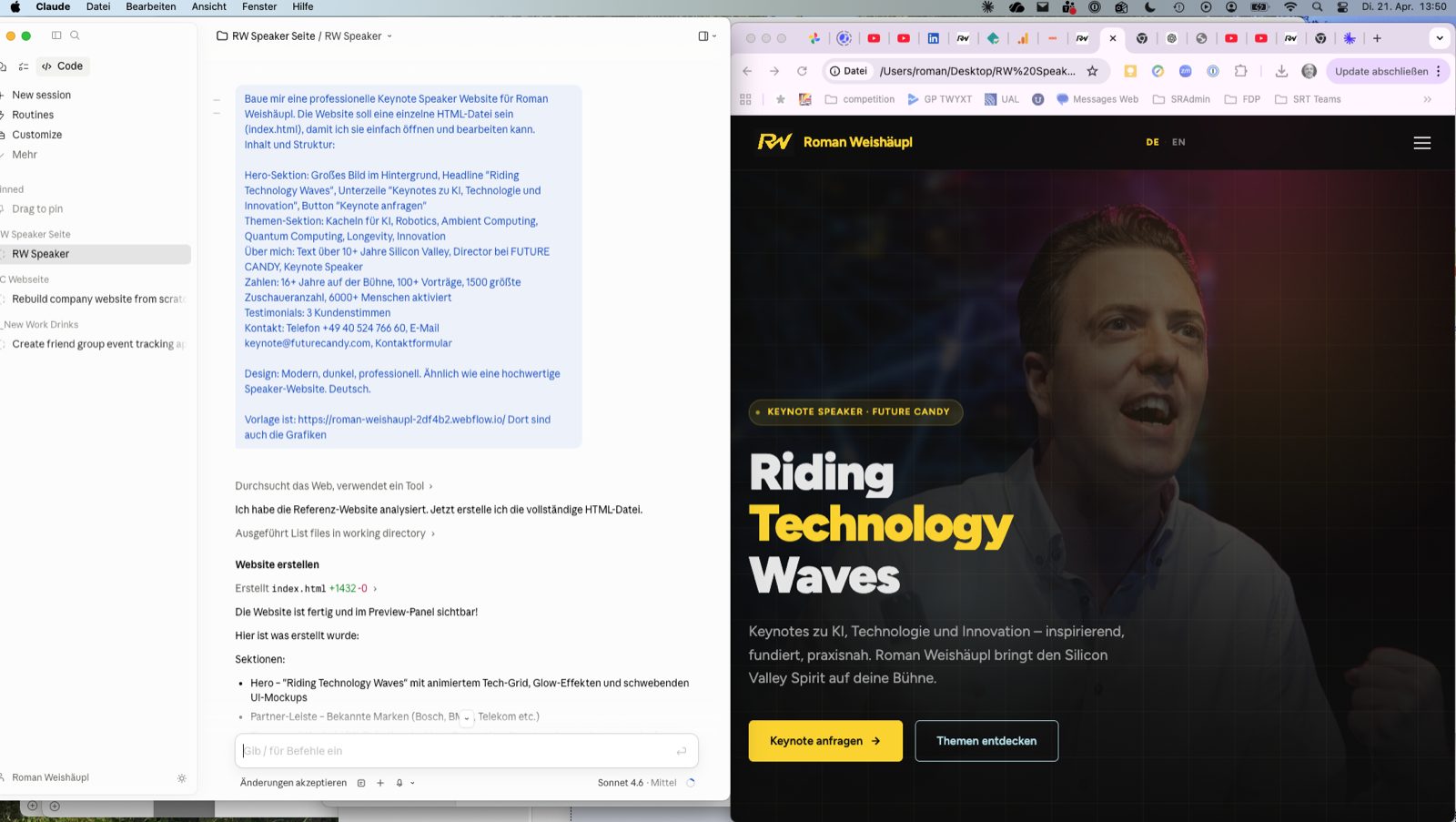
In parallel I rebuilt my blog and integrated it directly into the website. Goodbye WordPress.
And yet what emerged is a site that works bilingually, is built with accessibility in mind, is search-engine optimized, and can be adjusted at any time. Analytics is integrated, legal matters are covered.
The key thing is not the technology. It's the feeling afterwards. I have control, I understand the connections, and I can change anything at any time.
"Speed doesn't come from more resources. It comes from fewer dependencies."
"Those who build it themselves don't just change the result. They change their own perspective."
What Organizations Can Learn From This
What works for me in the small is even more interesting at scale. Many organizations try to manage new technologies the way they're used to: with clear plans, structured processes, and a high demand for predictability. But this is exactly where a break is occurring right now.
The development around AI is so dynamic that classical planning approaches are hitting their limits. What seems sensible today may already be outdated tomorrow. A linear approach loses effectiveness in this environment because the conditions are permanently changing.
What gains importance instead is an iterative approach. Try, learn, adjust. Not as a theoretical model, but as lived practice in everyday work.
At the same time it becomes clear that organizations cannot solve this shift through new roles or external expertise alone. Buying in specialists for every new development is neither scalable nor sustainable.
The real strength lies in people who are willing to engage with the new, who experiment, ask questions, and take things into their own hands. This is exactly where Digital Explorers emerge within organizations.
For this to work, however, a clear framework is needed. Experimenting must not mean working in an uncontrolled way or taking risks that endanger the company. Especially when deploying AI, topics like data security, accountability, and transparency play a central role.
The task of organizations shifts accordingly. Away from complete control of individual steps, towards designing an environment that provides orientation while leaving room for exploration.
In the end it's not just about technology. It's about cultural change. Away from the idea that innovation comes from outside or is carried only by a few specialists. Towards an organization in which many people start shaping things themselves.
Back to the VCR
When I think about that evening in the living room today, I see it differently. It was never really about the VCR. It was about the decision to engage with something new – or not.
My parents decided back then that it was too complicated. I made a different decision today.
The Real Invitation
We're standing at one of those moments again. New technologies are here, and they're here to stay. The question isn't whether you understand everything right away.
The question is whether you start.
"The future belongs not to those who understand everything. But to those who begin."
I started Vibe Coding at 47. Not because I had to. But because I wanted to know what's possible.
And honestly: I have no idea what I'll start at 57. But I know I'll start.
If you want to find out how you can make this kind of entry into new technology work for you – or how such an approach could be applied in your organization – let's talk.